
“See Me Talk” Project
What We’re Studying
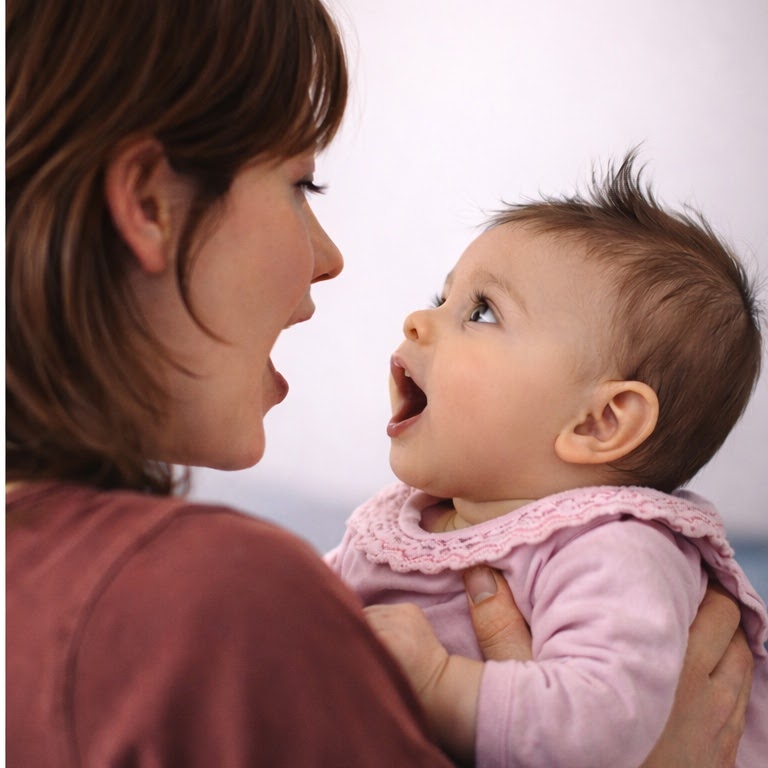
Autism is diagnosed around four times more often in males than in females, and the linked language challenges happen more frequently in males too. This raises the possibility that some early developmental factors may be protective for females. This project investigates whether females may show early protective factors linked to different language developmental trajectories and autistic traits. In particular, we study whether sex differences in how babies look at people’s faces during speech in the first year of life—especially in the attention they pay to mouth movements during speech—could help explain later sex differences in language skills and autistic traits. We also investigate whether these potential sex differences replicate across sites (UK, Italy, Sweden) and contexts (screen-based eye-tracking vs. live eye-tracking).
To this aim, we re-analyse three large existing European eye-tracking datasets collected in three international laboratories (MEDEA Autism Lab in Italy, DiVE Lab in Sweden, and CBCD in the UK). In a large sample of infants (N = ~ 476), we examine how much attention female and male infants with an elevated likelihood of autism (i.e., those with an older autistic sibling; infant siblings) and infants with typical likelihood pay to the mouth of a talking face, both in screen-based tasks and in more natural, interactive settings. We then link these early attentional patterns to language skills and autistic traits in toddlerhood.
Ultimately, this project aims to identify sex-specific early markers related to language and communicative development in autism and to inform earlier, more tailored support for autistic young children and their families.
The project is funded by the Polish National Science Centre (NCN; Sonatina 7: 2023/48/C/HS6/00264, 2023-2026; 544 740 PLN) and is hosted at our Babylab PAN at the Institute of Psychology, Polish Academy of Sciences (IP PAN).



Our Publications
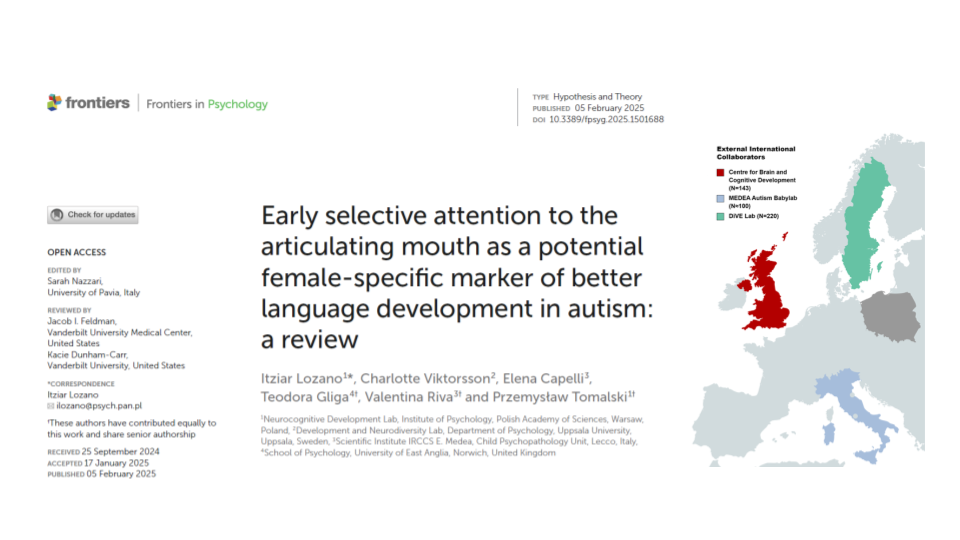
Lozano, I., Viktorsson, C., Capelli, E., Gliga, T., Riva, V., & Tomalski, P. (2025). Early selective attention to the articulating mouth as a potential female-specific marker of better language development in autism: A review. Frontiers in Psychology, 16, 1501688. https://doi.org/10.3389/fpsyg.2025.1501688
Summary: In this hypothesis and theory article, we propose that, like we previously found in female infants from the general population (Lozano et al., 2022), mouth-looking may also protect female infants-at-elevated-likelihood-for-autism population from potential later differences in language skills (but not males). This is a novel sex-specific early behavioral marker of language acquisition in autism, not targeted so far. This work frames my SONATINA project, where we are contrasting this hypothesis in large existing datasets across UK, Italy and Sweden (N = 476) [see below our pre-registered studies OS1 & OS2]. Our ultimate goal is to inform tailored interventions in both the general population and autism that consider sex as an important source of early individual variability in language skills.
Our Pre-registrations

“Early Visual Attention to the Articulating Mouth: A Potential Female-Specific Marker of Better Language Development in Autism” (in prep)
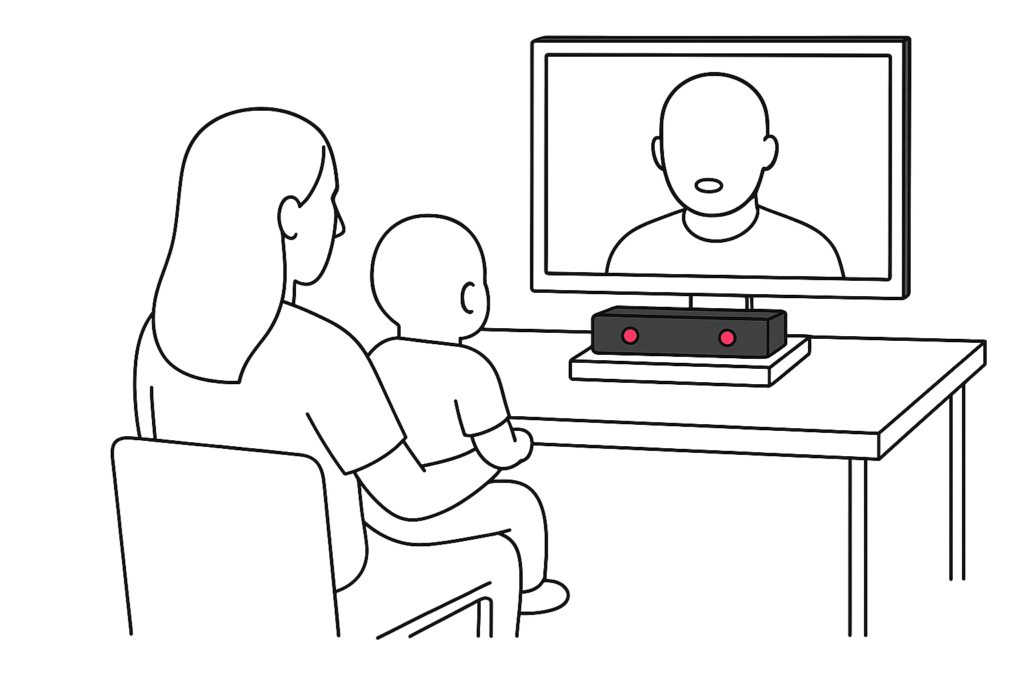
Through secondary analysis, we examined sex-differences in mouth-looking in infants with elevated (n =171) and typical (n = 85) likelihood for autism (N≈ 256; ~ 47.5% females) at 6, 9, 8, 12, and 14 months, using prerecorded talking faces (screen-based eye-tracking task). We then tested sex-specific associations between mouth-looking in the first year and parent-reported expressive/receptive vocabulary at 12-14 months, and autistic traits (ADOS scores) at 24 months. We took a longitudinal (6-24 months) and cross-sites approach (including cohorts from CBCD, UK, and MEDEA Babylab, Italy), to assess generalizability across developmental time and sites.


Lozano, I., Duszyk-Bogorodzka, A., Capelli, E., Viktorsson, C., Jones, E., Tomalski, P., … Riva, V. (2025, September 30). Early Visual Attention to the Articulating Mouth: A Potential Female-Specific Marker of Better Language Development in Autism. https://doi.org/10.17605/OSF.IO/F27ME
“Early Selective Attention to the Mouth in a Live Infant Eye Tracking Study: Sex Differences and Potential Female-Differentiated Links to Language Development and Autistic Traits” (under review)
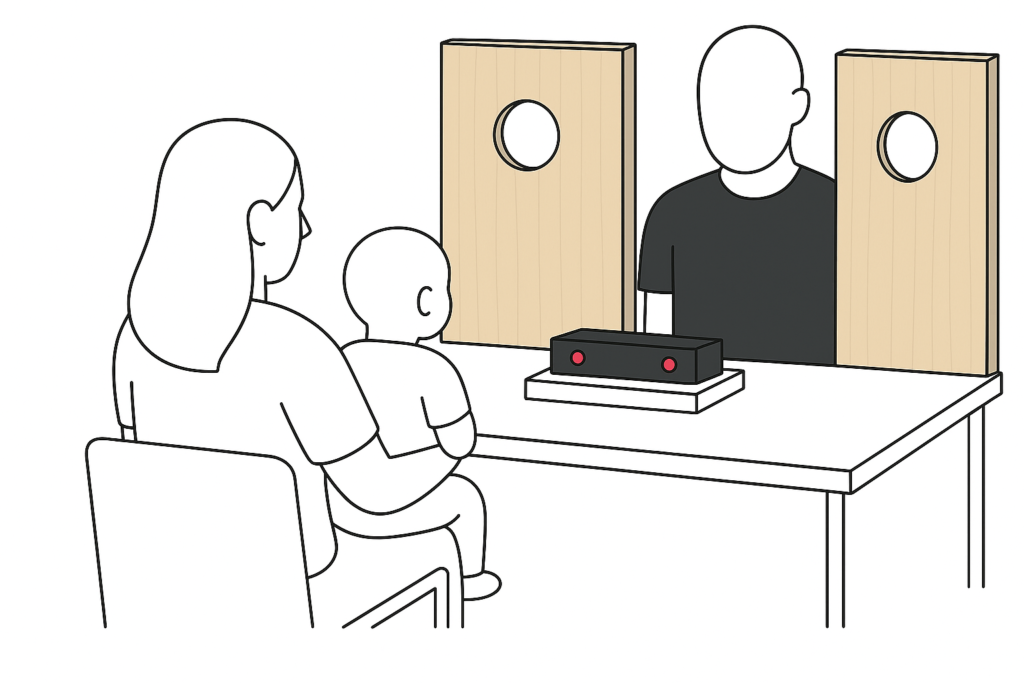
In this pre-registered study, we investigated whether sex differences in mouth-looking to real talking faces in infancy and toddlerhood (10 and 14 months) also occur in infants at elevated likelihood for autism. We also explored female-unique links between mouth-looking in this period and expressive and receptive language development and autistic traits in toddlerhood (14 and 24 months). Taking a secondary data analysis approach, we re-analysed ‘live’ eye-tracking longitudinal data from naturalistic social interactions, where infants’ attention to talking faces has been underexplored (N = 130 infants; 99 at elevated and 31 at typical likelihood for autism; 52.52 % females).
Lozano, I., Viktorsson, C., Capelli, E., Gliga, T., Kozioł, A., Riva, V., … Falck-Ytter, T. (2025, November 3). “Early Selective Attention to the Mouth in a Live Infant Eye Tracking Study: Sex Differences and Potential Female-Differentiated Links to Language Development and Autistic Traits”. Retrieved from osf.io/yr2ug